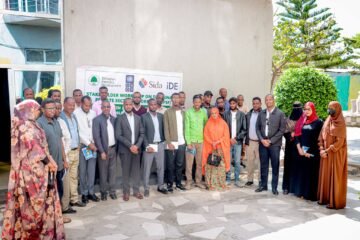
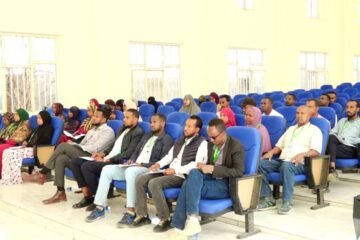
A significant management awareness workshop on “The Right Tree, The Right Place, The Right Purpose (RTP-IKI Project)” was successfully conducted at Duule Hotel in Jigjiga City,
The workshop aimed at establishing and strengthening the RTP-IKI Project Management System within the Somali Regional State Government. The initiative focuses on ensuring that the right tree is planted in the right place and managed by the right institution, thereby enhancing sustainable environmental protection, proper land management, and effective institutional coordination.
The workshop was officially opened by H.E. Eng. Muhyadin Abdi Hussein, Minister of the Somali Regional State Environmental Protection and Rural Land Administration Bureau (EPRLAB). In his opening remarks, the Minister emphasized the critical importance of environmental conservation, sustainable land administration, and strong collaboration among government institutions for the successful implementation of the RTP-IKI Project.
The event brought together ministers and deputy ministers from key sector offices, including:
- Bureau of Agriculture
- Bureau of Irrigation Development
- Bureau of Livestock Development
- Somali Regional State Agricultural and Livestock Research Institute
- Jigjiga University
- and other relevant partner institutions
Participants engaged in in-depth discussions on project implementation strategies, institutional coordination mechanisms, and the overall role of the RTP-IKI Project in promoting environmental sustainability and combating deforestation.
The project also supports the collection, propagation, and conservation of indigenous (endogenous) plant species. These native seeds will be raised in regional nurseries and replanted in their natural environments to prevent extinction and conserve biodiversity.
Furthermore, the RTP-IKI Project places strong emphasis on community job creation as a strategy to reduce illegal tree cutting and land degradation. Local communities will be organized into cooperatives responsible for seed collection, propagation, and nursery development. After passing laboratory quality control stages, collected seeds will be propagated in regional nurseries, contributing to income generation while supporting long-term environmental protection efforts.